Goal: Open the chest, strengthen the back extensors, and counteract forward rounding from sitting or screen posture.
-
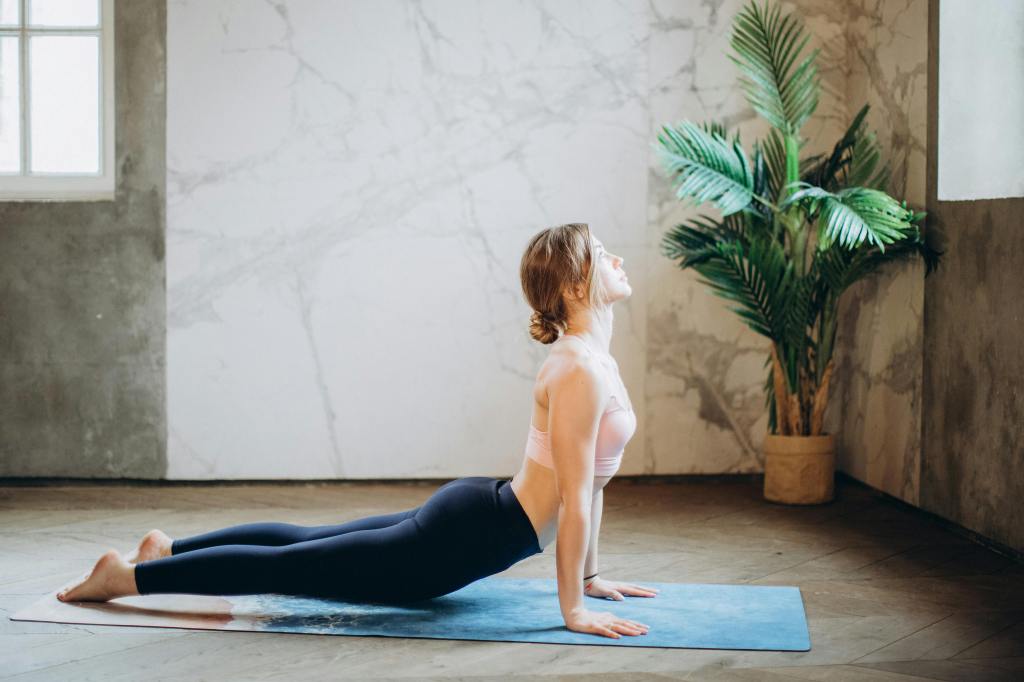
Cobra Pose (Bhujangasana) — Strengthens the spinal extensors and opens the chest and shoulders.
Element Focus & Description Yoga (The Posture) Lie on your stomach, placing your hands under your shoulders. Inhale and press through your hands to lift your head and chest. Keep your pubic bone grounded, your elbows close to your body, and primarily use your back muscles (not your arms) to lift. Spinal Health (The Anatomy) Cobra is a gentle spinal extension (backbend) that strengthens the erector spinae muscles along the spine. It counteracts the chronic flexion (forward hunching) of daily life and helps restore the natural lumbar curve. It is crucial for improving thoracic mobility, which can alleviate neck and shoulder issues related to a stiff upper back. Mindfulness (The Experience) On the inhale, feel the chest broaden and the front of the body open. On the exhale, soften the glutes and shoulders, ensuring the work is concentrated in the back muscles. Cultivate a sense of uplift and heart opening, approaching the pose with ease and control. -
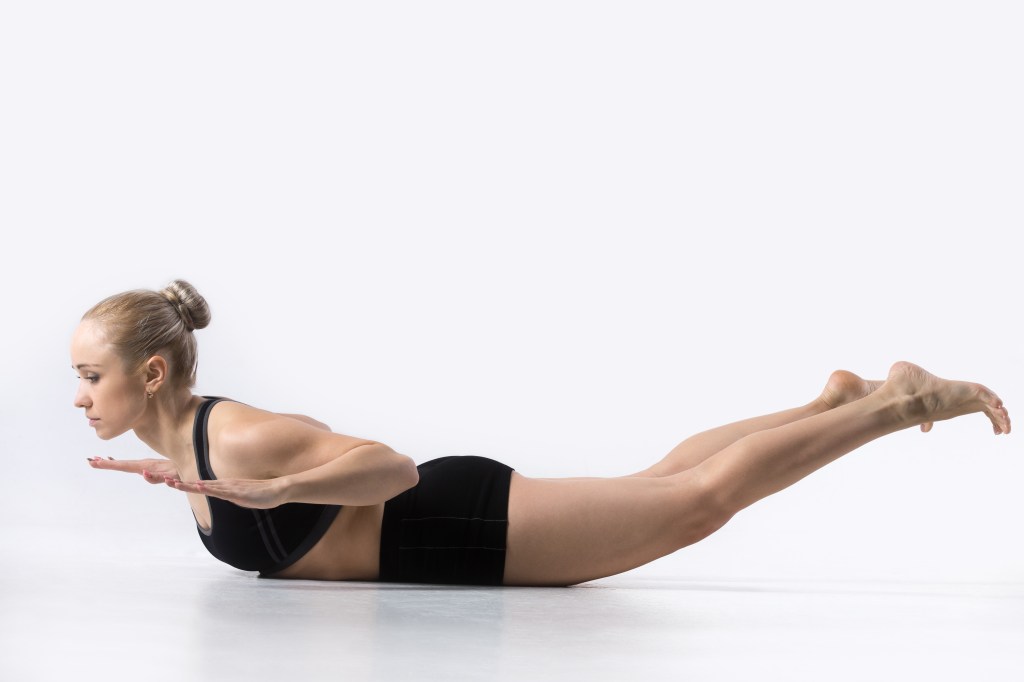
Locust Pose (Śalabhāsana) — Builds power in the entire back chain, improving posture and spinal stability.
Element Focus & Description Yoga (The Posture) Lie on your stomach, arms alongside your body, palms facing down. On an inhale, simultaneously lift your head, chest, arms, and legs off the floor. Keep your gaze down to maintain a long neck. Reach strongly through your fingers and toes. Spinal Health (The Anatomy) Locust is a pure, powerful backbend that is driven almost entirely by the posterior chain muscles (glutes, hamstrings, and lower back extensors). It builds essential strength to stabilize and support the lumbar spine and is highly therapeutic for individuals with mild disc issues (with caution) by strengthening the muscles that protect the vertebrae. Mindfulness (The Experience) Focus on equal effort and length—reaching through the extremities while lifting the torso. Avoid crunching or pushing the hips. Use the breath to sustain the lift, cultivating a feeling of lightness and buoyancy despite the effort. -
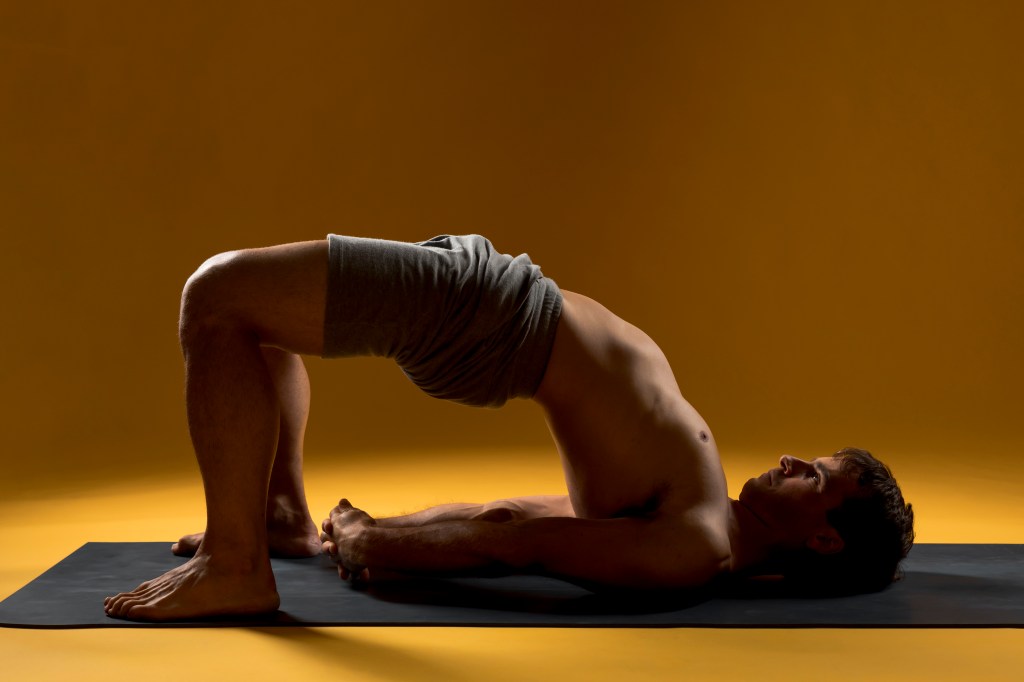
Bridge Pose (Setu Bandhasana) — Strengthens the lower back and glutes while gently opening the chest.
Element Focus & Description Yoga (The Posture) Lie on your back, bend your knees, and place your feet flat on the floor, hip-width apart. Press into your feet and lift your hips toward the ceiling. Clasp your hands underneath your back or keep them alongside your body. Spinal Health (The Anatomy) Bridge is a supported backbend that helps to mobilize the thoracic spine and gently stretch the hip flexors and chest. By strengthening the glutes and hamstrings, it encourages the pelvis to stay in a healthy position, relieving pressure on the low back. It is a fantastic pose for spinal maintenance and can be done safely by most people. Mindfulness (The Experience) Use the press of the feet to drive the lift of the hips, keeping the neck long and relaxed. On the inhale, feel the spine lengthening; on the exhale, settle into the foundation. This pose encourages an open, receptive heart and a feeling of stability. -
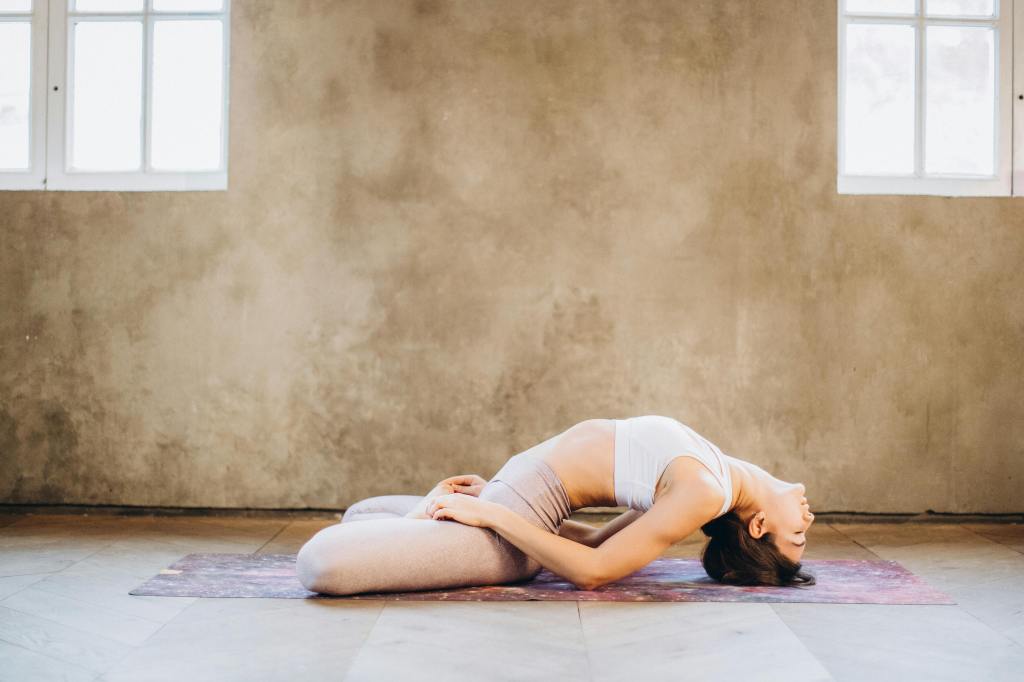
Fish Pose (Matsyāsana) — Expands the chest and reverses thoracic flexion.
Element Focus & Description Yoga (The Posture) Lie on your back. Slide your hands, palms down, underneath your hips/glutes. Press your elbows and forearms into the floor and lift your chest, arching your upper back. Gently release the crown of your head back to the floor, using the elbows for support. Spinal Health (The Anatomy) Fish Pose focuses on thoracic and cervical extension, effectively counteracting the rounded upper back (kyphosis) and forward head posture common today. It opens the chest and shoulders, allowing the upper spine to regain its natural curve and improving respiratory function. Note: Individuals with severe neck issues should place a block under the head instead of dropping the crown. Mindfulness (The Experience) Focus on the deep, open sensation in the chest and the free movement of the breath. Use the elbows to manage the weight in the neck. Feel the lightness of the lift and the expansion of the heart space, symbolizing openness and courage. -
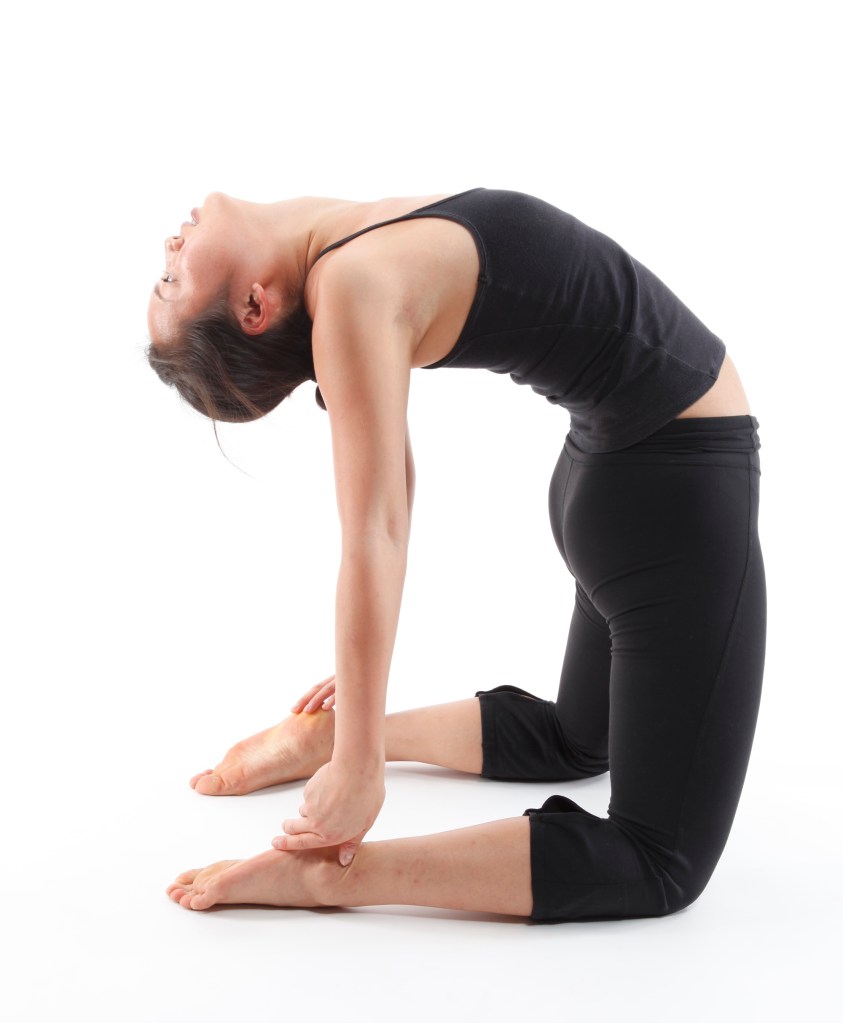
Camel Pose (Uṣṭrāsana) — Deep backbend that stretches the front body and mobilizes the thoracic spine.
Element Focus & Description Yoga (The Posture) Kneel on the floor, hips over knees. Place your hands on your low back, fingers pointing down, or reach back for your heels. Press your hips forward and lift your chest toward the ceiling, allowing your head to drop back if comfortable. Spinal Health (The Anatomy) Camel is a deep, invigorating backbend that requires significant thoracic mobility and hip flexor stretch. It is a powerful antidote to chronic slouching, strengthening the back muscles while stretching the anterior fascia. It effectively re-establishes the natural curvature of the entire spine, mobilizing areas that are often stiff and compressed. Mindfulness (The Experience) Approach the pose with humility and patience. Use the exhale to press the hips forward and the inhale to lift the chest higher. Find the balance between effort and surrender, feeling the vulnerability and power that comes with opening the front of the body. -
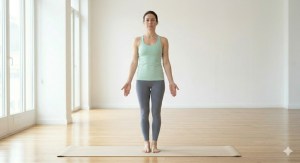
Mountain Pose (Tāḍāsana) — Builds postural awareness and promotes proper spinal alignment.
Element Focus & Description Yoga (The Posture) Stand with your feet together or hip-width apart. Root down through all four corners of your feet. Engage your thighs, gently draw your tailbone toward the floor, lift your chest, and reach the crown of your head toward the ceiling. Allow your arms to hang naturally by your sides, palms facing forward or inward. Spinal Health (The Anatomy) This is the foundation of all standing poses and essential for training neutral spinal alignment. When practiced correctly, it teaches the body how to maintain the spine’s natural S-curve by engaging the deep core stabilizers and balancing the pelvis. It counteracts the slump of poor posture by stacking the bones, which minimizes strain on the intervertebral discs and supporting ligaments. Mindfulness (The Experience) Practice whole-body awareness. Mentally scan your body, noticing the balance of weight between your heels and balls of your feet. Visualize a string pulling up from the crown of your head, lengthening the spine. Use your breath to find a subtle lift and spaciousness in the ribcage, anchoring your attention in this state of still, stable presence. -
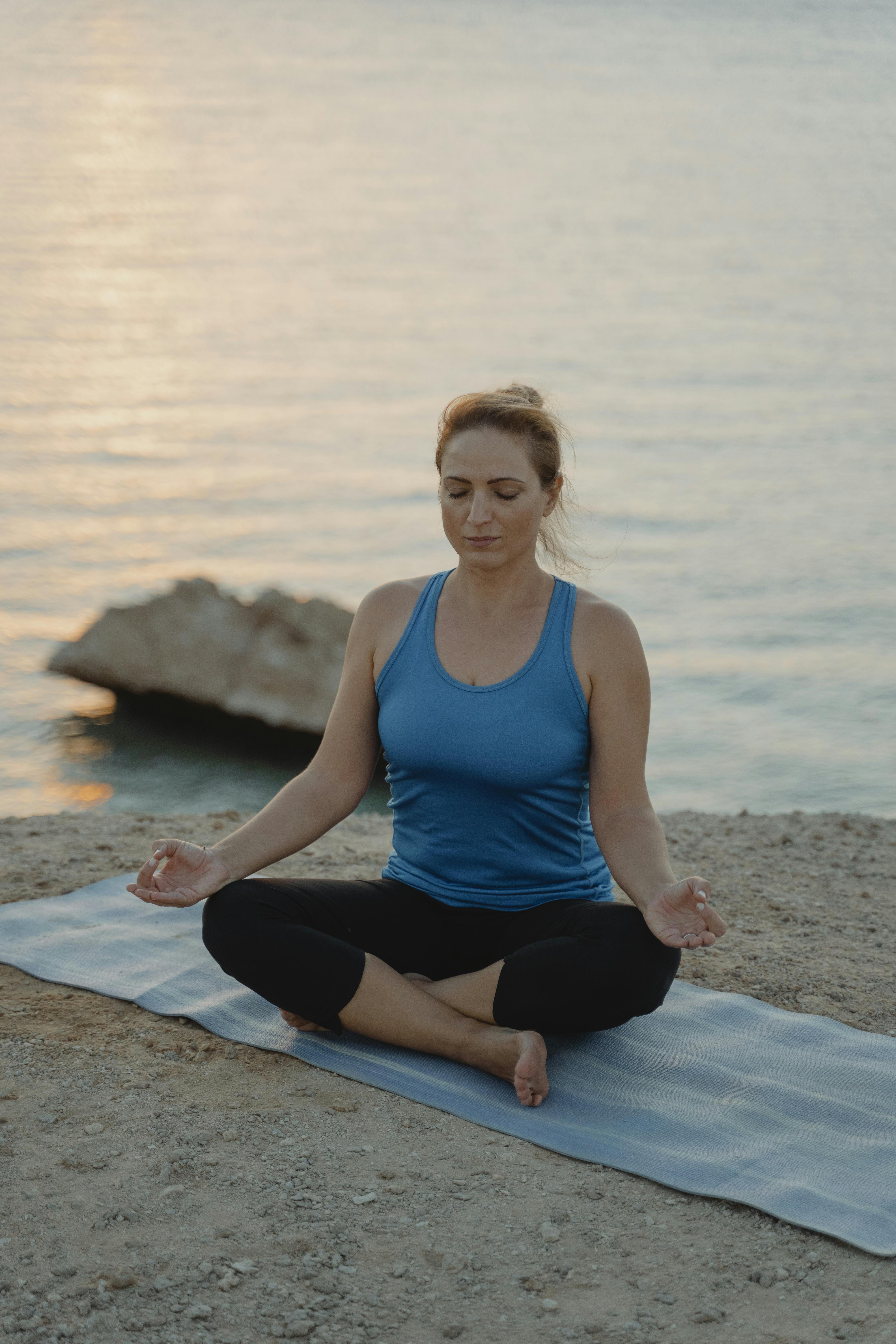
Easy Pose (Sukhāsana) — Encourages upright sitting and mindful breathing to lengthen the spine.
Element Focus & Description Yoga (The Posture) Sit on the floor (or a cushion/block) with your legs crossed loosely. Ensure your knees are level with or lower than your hips to allow the spine to lengthen effortlessly. Rest your hands on your knees or lap. Spinal Health (The Anatomy) While simple, this pose is fundamental for establishing a neutral, stable base for the spine. By elevating the hips, it allows the pelvis to tilt slightly forward, supporting the natural S-curve of the lumbar spine. Practiced daily, it trains the body for healthy, comfortable seated posture, reducing the strain that leads to lower back pain. Mindfulness (The Experience) Settle onto your foundation and feel the sit bones connecting to the earth. Soften your face and shoulders. Use the breath to find a sense of upward lift and ease (Sukha means “ease”). This is a primary posture for meditation, cultivating a focused yet relaxed awareness.
 innerspine.com