Goal: Open tight chest and shoulder muscles while strengthening the upper back and postural stabilizers.
-
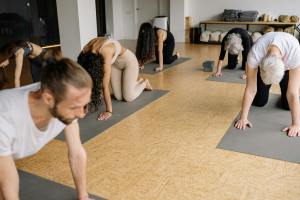
Cat–Cow Pose (Marjāryāsana–Bitilāsana) — Mobilizes the spine and awakens back-body awareness.
Element Focus & Description Yoga (The Posture) Start on your hands and knees (tabletop position). Cow Pose (Bitilāsana): Inhale, drop your belly, arch your back, and lift your tailbone and gaze (Spinal Extension). Cat Pose (Marjāryāsana): Exhale, round your back toward the ceiling, tuck your tailbone, and draw your chin to your chest (Spinal Flexion). Flow smoothly between the two. Spinal Health (The Anatomy) This dynamic movement is vital for promoting fluidity and range of motion throughout the entire spine (cervical, thoracic, and lumbar). By gently mobilizing the vertebrae, it warms the tissues, increases blood flow, and keeps the discs nourished. It is a fundamental exercise for improving spinal hygiene and addressing stiffness. Mindfulness (The Experience) Synchronize your breath and movement: Inhale to arch (Cow), Exhale to round (Cat). Focus on initiating the movement from the tailbone and allowing it to ripple up through the spine to the neck. Use this rhythm to cultivate a meditative, mindful presence in the body’s movement. -
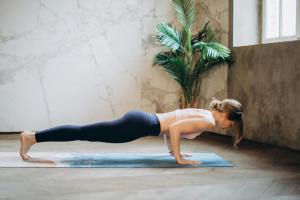
Four-Limbed Staff Pose (Chaturaṅga Daṇḍāsana) — Strengthens shoulders and upper arms while training scapular control.
Element Focus & Description Yoga (The Posture) From Plank, exhale, and bend your elbows straight back toward your heels, hugging them close to your ribs. Lower your body until your shoulders are no lower than your elbows. Maintain a straight line from head to heels, keeping the core engaged and the chest lifted. Spinal Health (The Anatomy) Chaturaṅga requires immense integrated core and upper body strength to maintain the spine’s neutral alignment while transitioning downward. It specifically strengthens the muscles that support the thoracic spine and shoulder stability (serratus anterior), preventing the spine from collapsing into extension (lordosis) or flexion (kyphosis) during movement. Mindfulness (The Experience) This pose demands immediate, focused effort. Practice present-moment engagement, ensuring every muscle fiber is activated. Use the breath to prevent holding tension in the neck or jaw, finding a sense of powerful, controlled descent rather than a drop. -
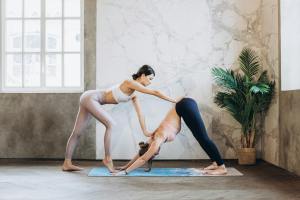
Downward-Facing Dog (Adho Mukha Śvānāsana) — Stretches the chest and shoulders while lengthening the spine.
Element Focus & Description Yoga (The Posture) From hands and knees, lift your hips up and back, forming an inverted ‘V’ shape. Spread your fingers wide, press your palms down, and draw your hips high. You may keep a bend in your knees if your hamstrings are tight to prioritize a straight spine. Spinal Health (The Anatomy) Down Dog is a mild inversion that provides wonderful axial decompression to the spine, essentially lengthening the vertebral column due to the pull of gravity on the pelvis. It helps stretch the entire posterior chain (hamstrings, calves, and back muscles), relieving tension that can pull the pelvis out of alignment and strain the low back. Mindfulness (The Experience) Focus on the breath to create space—inhale to lengthen the sides of your body, exhale to settle the hips back and down. Ground your hands firmly. Practice dynamic stillness, using the pose to find energy, stretch, and a moment of grounding rest. -
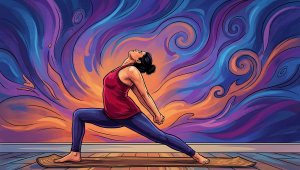
Hands Bound Warrior Pose (Baddha Hasta Virabhadrasana) — Stretches hip flexors and chest, correcting slumped posture.
Element Focus & Description Yoga (The Posture) From Warrior I stance, interlace your fingers behind your back. As you exhale, fold your torso to the inside of your front thigh (or rest it on top). Draw your hands away from your back and toward the ceiling, allowing a gentle traction in the shoulders. Spinal Health (The Anatomy) This variation of Warrior is a forward fold that provides an intense shoulder and chest opening while strengthening the legs. The bound hands help to lift and stabilize the shoulders, actively stretching the pectoral muscles and improving mobility in the upper thoracic spine—a crucial antidote to desk-work posture. Mindfulness (The Experience) Focus on the surrender in the fold and the release in the shoulders. Use the breath to deepen the stretch on the exhale, letting gravity assist. This pose invites humility and a deep inquiry into the balance between strength (in the legs) and flexibility (in the upper body). -
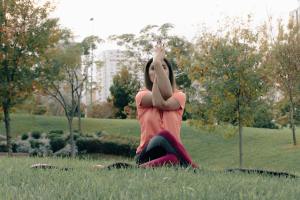
Eagle Arms Pose (Utkata Garudasana) — Opens the upper back and shoulders, improving scapular mobility.
Element Focus & Description Yoga (The Posture) While seated or standing, stretch your arms forward. Cross one elbow over the other and bend your elbows, bringing the backs of your hands together, or try to bring your palms together. Lift your elbows and press your forearms away from your face. Spinal Health (The Anatomy) This pose is a profound stretch for the muscles between the shoulder blades (rhomboids and trapezius), often tight from forward-slouching. By creating space in the upper back, it improves thoracic spine mobility and helps relieve tension that can creep up into the neck and shoulders. It is essential for counteracting the forward-head posture of computer use. Mindfulness (The Experience) Focus on the stretch between your shoulder blades. Use your inhale to create space in the upper chest and your exhale to draw the elbows slightly higher and further away. Practice patience and presence in the intensity of the stretch, releasing tightness layer by layer. -
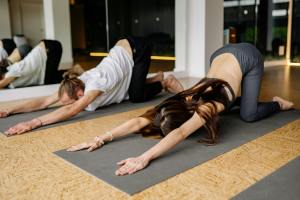
Puppy Pose with Triceps Stretch (Uttāna Śiśāsana) — Lengthens the spine and stretches shoulders deeply.
Element Focus & Description Yoga (The Posture) Start on your hands and knees. Walk your hands forward while keeping your hips stacked directly over your knees. Release your chest and forehead toward the floor, allowing the upper back to lengthen. Spinal Health (The Anatomy) Puppy Pose is an inversion/extension blend that beautifully lengthens and de-compresses the thoracic spine (mid-upper back). It is excellent for gently opening the shoulders and chest, relieving tension that contributes to a stiff, rounded upper back (kyphosis). The gentle gravity-assisted stretch can be wonderfully therapeutic for chronic upper back tightness. Mindfulness (The Experience) Focus on the breath to create expansion in the ribcage, feeling the gentle massage of the floor on your forehead. Use the exhale to let your heart melt closer to the floor. Cultivate a sense of restful opening and surrender in the upper body. -
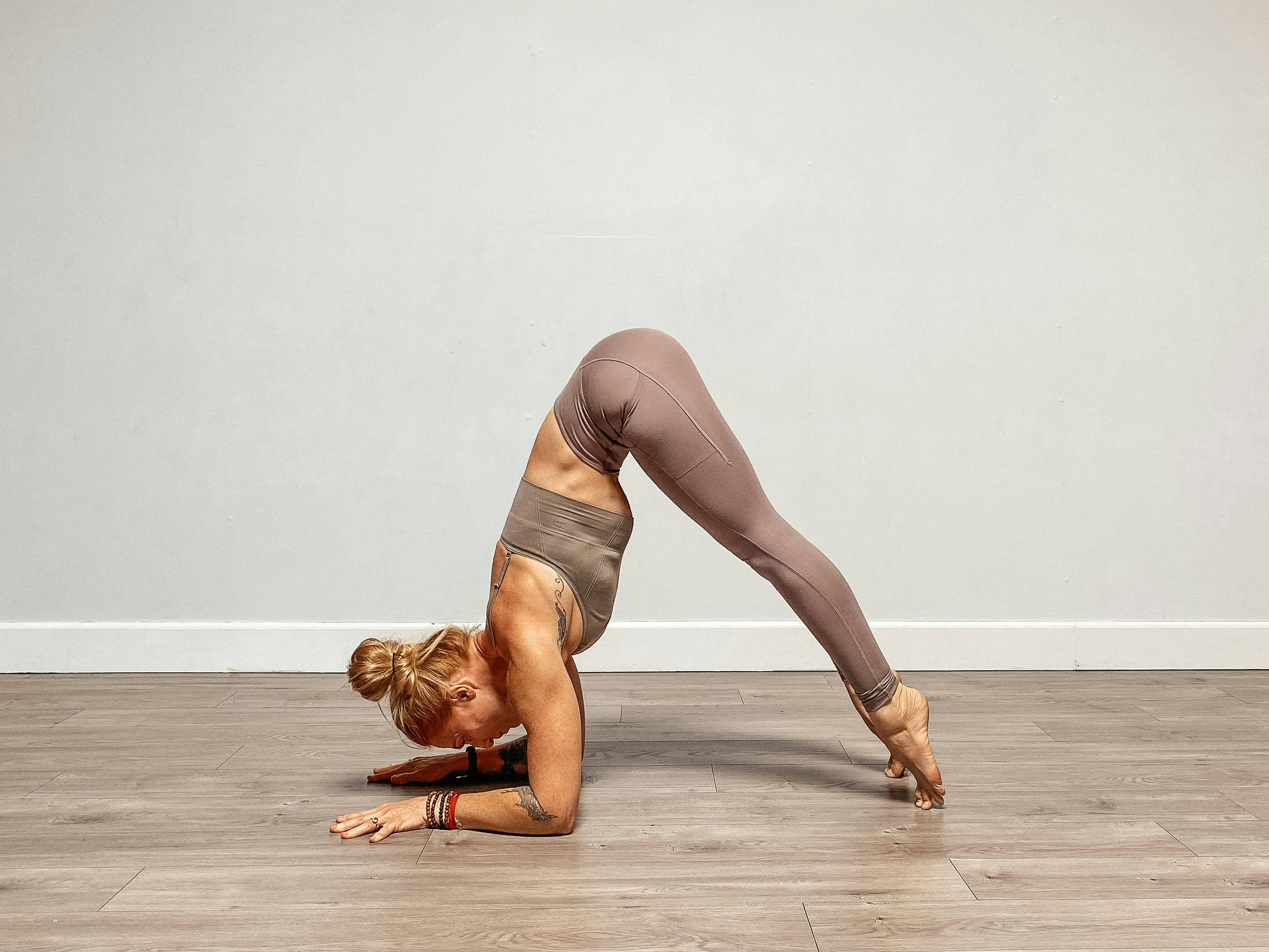
Dolphin Pose (Ardha Pincha Mayūrāsana) — Strengthens upper back and shoulders while promoting spinal elongation.
Element Focus & Description Yoga (The Posture) Start on your hands and knees. Forearms are flat on the floor, elbows shoulder-width apart. Tuck your toes and lift your hips up and back, similar to Downward-Facing Dog. Press firmly into your forearms and lengthen the spine. Spinal Health (The Anatomy) Dolphin Pose builds immense shoulder and upper back strength and stability without the risk of hyperextension that can occur in Down Dog. The focused strength helps support the cervical and thoracic spine, improving posture and reducing neck strain. It helps train the core to stabilize the spine in an inverted position, preparing it for more complex poses. Mindfulness (The Experience) Focus on actively pressing the forearms and elbows into the floor, drawing the shoulders away from the ears. Direct your breath to the back of your lungs, cultivating focused strength and steadiness throughout the pose.
 innerspine.com